By Ismail Hossain Ripon, Travel Consultant at Zafir Tours, in Qatar
How Many Days Do You Need for a Morocco Tour Packages from Qatar?
Seven days can cover major cities such as Casablanca, Rabat, Fez and Marrakech, although the schedule will be busy. A 10–12-day itinerary allows more time for a Sahara Desert experience near Merzouga. Travellers who prefer a relaxed pace or additional destinations can consider 14 days.
The right duration depends on your arrival airport, travel dates, preferred destinations and how much time you are comfortable spending on the road.
Planning a Morocco Trip from Doha? Start Here
If you’re based in Doha and weighing a Morocco trip, three questions usually come up first: how many days do you actually need, what should it cost, and do you need a visa? Here’s the short version, with the full detail below.
Most Morocco trips booked out of Qatar run 7 to 14 days, starting in Casablanca or Marrakech after a nonstop flight of roughly 7.5–8.5 hours from Doha.
Qatari passport holders can currently enter Morocco visa-free for stays of up to 90 days. Other Qatar residents should check their own eligibility on Morocco’s official Accès Maroc portal before booking anything non-refundable.
What you pay depends mainly on travel dates, hotel standard, and whether flights are bundled into the package. Message us on WhatsApp through our contact page, and we’ll turn around an itemised quote in Qatari riyals, usually within a day.
Morocco from Qatar, at a Glance
Detail | What to know |
Flying from | Hamad International Airport (DOH), Doha |
Main arrival airport | Mohammed V International Airport (CMN), Casablanca |
Also worth checking | Marrakech Menara Airport (RAK): served by Qatar Airways, though many schedules route via a short stop in Casablanca; confirm the current routing when you book |
Popular stops | Marrakech, Fez, Casablanca, Rabat, Chefchaouen, Merzouga |
Typical trip length | 7–14 days |
Best months | March–May and September–November |
Currency | Moroccan dirham (MAD) |
Official languages | Arabic and Amazigh (Darija and French widely spoken; English common in tourism) |
Where to stay | Hotels, traditional riads, desert camps |
Visa: Qatari passport | Visa-free, up to 90 days (confirmed November 2026) |
Visa: other Qatar residents | Depends on nationality; check Accès Maroc before booking |
The Morocco Trips We Build Most Often for Doha Travellers
Morocco rewards a flexible itinerary more than most destinations. The five formats below cover what clients ask for most, but treat them as starting points; we adjust the route once we know your dates, pace, and who’s travelling with you.
Trip style | Duration | Core route | Pace | Best for |
City Highlights | 7 days | Casablanca → Rabat → Fez → Marrakech | Brisk | First-timers, short leave |
Imperial Cities & Sahara | 10–12 days | Fez → Merzouga → Dades Valley → Marrakech | Moderate | Travellers who want the desert too |
Family Holiday | 8–10 days | Marrakech-based, with excursions | Relaxed | Families, slower pace |
Private Tour | Flexible | Built around your interests | Your choice | Couples, private groups |
Luxury Holiday | Flexible | Marrakech + premium stays | Relaxed | Honeymoons, special occasions |
City Highlights: 7 Days
Best for first-timers with limited annual leave who still want to see the big names. A week across Casablanca, Rabat, Fez and Marrakech gives a genuine feel for the country without long desert driving days: the Hassan II Mosque in Casablanca (access depends on prayer times, so we confirm this before locking in your itinerary), the Kasbah of the Udayas in Rabat, unhurried hours in the Fez medina, and Marrakech’s souks to finish.
One honest note: seven days across four cities is a brisk pace. If slow travel matters more to you than covering every city, tell us and we’ll drop a stop rather than rush you through it.
Imperial Cities & Sahara: 10 to 12 Days
This is the itinerary most people picture when they imagine a “proper” Morocco trip: Casablanca, Rabat and Fez, then south through the Middle Atlas to the dunes at Merzouga, across to Dades Valley and Ouarzazate, and on to Marrakech.
Highlights include the Fez medina, a night in a desert camp near Erg Chebbi, Todra Gorge, and Aït Ben Haddou: the kasbah you’ll recognise from film and television even if you can’t place which productions.
The trade-off worth knowing upfront: Fez–Merzouga and Merzouga- Marrakech are both full driving days. Take 12 days over 10 if your schedule allows; the extra two days go a long way toward not feeling like you’re sleeping in a different bed every night.
Family Holiday: 8 to 10 Days
Morocco works well with children when the itinerary respects that they don’t enjoy eight-hour car journeys any more than adults do. We usually build these around several nights in Marrakech with day excursions rather than changing hotels nightly, a cooking class, a craft workshop, garden visits, a shorter Atlas Mountains trip, and a coastal day in Essaouira.
For how we think about pacing, accommodation and flight timing with children generally, see our guide to family holiday planning from Qatar.
Private & Luxury Tours
A private tour means your transport, guides, hotels and pace are chosen around you rather than slotted into a fixed route. Luxury versions lean into boutique riads, premium hotels and a more relaxed daily schedule.
Whatever version you choose, get the specifics in writing before paying anything: exact hotel names and room categories, whether vehicles and drivers are private, and precisely which activities are included.
What Actually Drives the Price of a Morocco Trip from Qatar
There’s no single “Morocco package price,” and we don’t publish a fixed price list; that’s deliberate, not an oversight. Two Morocco trips of the same length rarely cost the same once hotel category, season and private-versus-shared transport are factored in. What we can do is turn around a real, itemised number once we know your dates.
What affects the price | Why |
International flights | Fares shift with travel dates and how far ahead you book |
Trip length | More nights means more accommodation and transport |
Hotel category | A standard hotel and a boutique riad are priced very differently |
Private transportation | A dedicated vehicle and driver cost more than shared transfers |
Group size | Per-person costs usually drop as the group grows |
Desert camp standard | Facilities and included activities vary a lot between camps |
Meals and sightseeing | What’s bundled versus paid locally changes the headline number |
Season | Spring and autumn demand can push prices up |
Are Flights Included?
Not automatically. Some Morocco packages are land-only; others bundle in the Doha–Morocco flights. Before committing to anything, get written confirmation of:
- Return flights from Doha
- Airport transfers
- Hotel accommodation and room category
- Breakfast and any other included meals
- Intercity transportation
- Local guides
- Entrance fees at attractions
- Desert camp accommodation and activities, if applicable
- Travel insurance
- Taxes, cancellation terms, and any charges that aren’t obvious upfront
If you want an actual number instead of a rough range, get in touch through our contact form with your dates and group size and we’ll put together a quotation in Qatari riyals with everything itemised.
A Sample 10-Day Itinerary from Doha
This is a planning sketch, not a fixed Zafir Tours departure, but it’s close to what many of our Imperial Cities & Sahara bookings end up looking like.
Day | Where | What’s happening |
1 | Casablanca | Arrive, settle in |
2 | Casablanca → Rabat → Fez | Capital sightseeing, then on to Fez |
3 | Fez | Full day in the medina with a guide |
4 | Fez → Merzouga | Long drive through the Middle Atlas |
5 | Merzouga | Sahara Desert, camp overnight |
6 | Merzouga → Dades Valley | Todra Gorge en route |
7 | Dades Valley → Marrakech | Via Ouarzazate and Aït Ben Haddou |
8–9 | Marrakech | Palaces, souks, a free day to recover |
10 | Departure | Transfer to the airport |
Days 1–3: Casablanca is a practical starting point; most people give it a day, not three. Rabat is worth the detour for the Kasbah of the Udayas and Hassan Tower on the way to Fez, where a local guide earns their keep: the medina’s alleyways aren’t signposted for a reason.
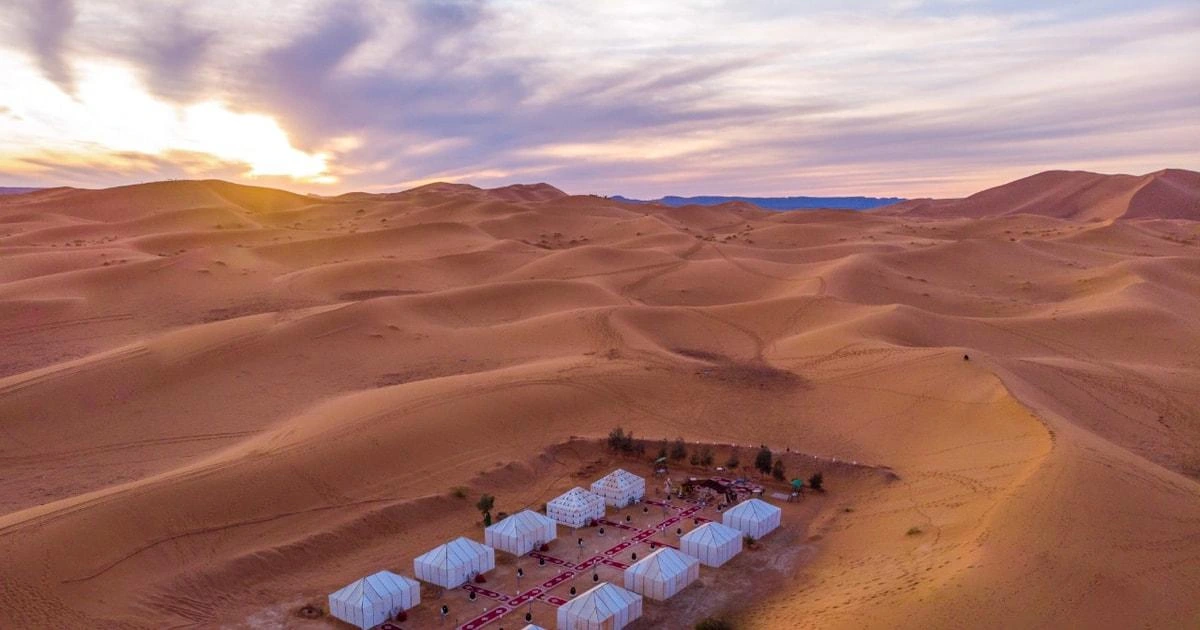
Days 4–5: Fez to Merzouga is around 460 km and runs roughly 8 to 9 hours on the road, so budget the whole day and build in rest stops; this is the one leg we never try to shorten. Once there, activities depend on your package and season: desert drives, a camel excursion at sunset, a night in a fixed or mobile camp. Ask about toilet and shower facilities before you book, and pack for genuinely cold desert nights even in a hot month.
Days 6–7: Merzouga to Dades Valley is a shorter leg, around 265 km, roughly 4 hours, with Todra Gorge as the standout stop. From there to Marrakech via Ouarzazate and Aït Ben Haddou is about 330 km and 6 to 6.5 hours: doable in a day, but mountain weather over the Tizi n’Tichka pass can add hours you didn’t plan for.
Days 8–9: Marrakech, Bahia Palace, Jemaa el-Fnaa, the old medina, then a genuinely free day for a cooking class, more shopping, or simply not being in a car.
Day 10: If your flight home leaves from a different city than you arrived in, check whether you need extra travel time or an overnight stop before finalising dates. Flying into Casablanca and out of Marrakech (or vice versa) often cuts out backtracking; it’s worth asking us directly when we scope your trip.
Getting There: Flights from Doha to Morocco
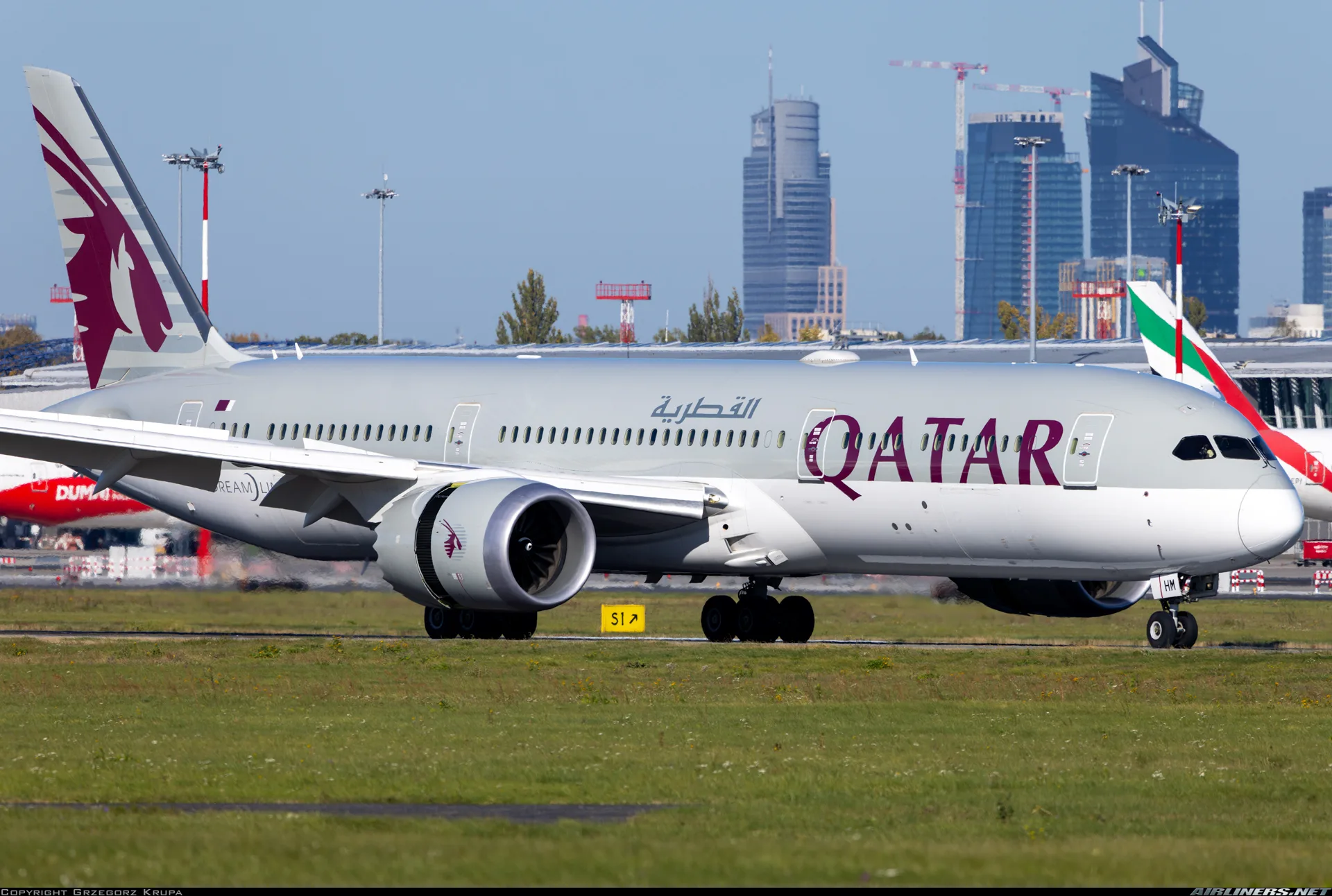
Hamad International Airport (DOH) is your starting point, and Mohammed V International Airport (CMN) in Casablanca is the main gateway. Qatar Airways also serves Marrakech Menara Airport (RAK), though schedules have varied between a nonstop service and routings via a short stop in Casablanca; confirm the current timetable once you have real dates in mind, since this changes seasonally.
Airlines: Qatar Airways and Royal Air Maroc both operate between Doha and Casablanca, with frequencies that shift by season. Check Qatar Airways and Royal Air Maroc directly once your dates are set.
Flight time: A nonstop Doha–Casablanca flight runs roughly 7.5 to 8.5 hours depending on routing and winds, long enough that an overnight flight is worth considering. Connecting flights, including most current Marrakech routings, take longer; confirm your actual arrival time before booking airport transfers or your first night’s hotel.
Which airport should you fly into? Casablanca suits itineraries built around Rabat, Fez and the north or centre of the country. Marrakech makes more sense if the Atlas Mountains and the south are your focus. For a multi-city trip, look at the whole route rather than picking whichever ticket is cheapest; a cheap flight into the wrong airport can cost you a full day of backtracking.
Visa Requirements for Travellers from Qatar
Morocco’s entry rules depend on your passport, not your Qatari residence status, a distinction that trips people up more than anything else we see. If you’re also untangling how Qatar’s own residency and sponsorship rules interact with international travel, see our overview of immigration rules for Qatar residents.
Qatari passport holders: as of November 2026, Qatari citizens can enter Morocco visa-free for tourist stays of up to 90 days. Entry policies between countries are occasionally revised, so confirm current terms on Morocco’s official Accès Maroc portal or with Moroccan authorities before booking anything non-refundable.
Qatar residents holding other passports: if you’re in Doha on an Indian, Pakistani, Bangladeshi, Filipino, or other foreign passport, your Morocco entry requirements follow your own nationality, not your Qatar residency. Some nationalities need a full visa; others may qualify for Morocco’s eVisa. Qatari residency alone doesn’t unlock eVisa eligibility; it’s one factor the system checks among several.
Checking eVisa eligibility: Morocco’s official Accès Maroc portal is the place to check; it looks at your nationality, passport type, country of residence, and any additional visas you hold. Where it applies, Morocco’s eVisa is typically a single-entry authorisation valid for up to 180 days, permitting a stay of up to 30 days, different terms from the 90-day visa-free allowance above, so don’t assume one covers the other.
What to have ready, depending on your nationality and circumstances:
- A passport valid well beyond your return date
- A visa or eVisa, if your nationality requires one
- Proof of return or onward travel
- Accommodation details
- Evidence of sufficient funds, if asked
- Supporting documents for children travelling with one parent or a guardian
For help with the documentation side, see Zafir Tours’ visa services, though the final decision on entry always sits with Moroccan immigration, not with us. For general background on the country, see Morocco on Wikipedia, and for UK nationals specifically, the UK government’s travel advice for Morocco is a useful independent reference point for how entry rules are typically interpreted at the border.
Best Time to Visit Morocco from Qatar
Morocco packs coast, cities, mountains, and desert into one country, and they don’t share a climate. Spring and autumn work for almost any itinerary; summer and winter reward picking your destination carefully.
Season | Conditions | Go for |
March–May | Comfortable for walking and sightseeing | Cities, culture, mountain excursions |
June–August | Hot inland and in the desert | Coastal towns like Essaouira and Agadir |
September–November | Comfortable across most regions | Cities, desert, cultural touring |
December–February | Cool, with cold nights in the mountains and desert | City breaks, select winter experiences |
Spring is arguably the easiest season to recommend for exploring Marrakech and Fez on foot. Summer turns inland cities and the Sahara into a different proposition; if you’re travelling during Qatar’s own summer break, we usually steer clients coastal.
October and November are when we see the most bookings that combine historic cities with a Sahara extension, while winter brings genuinely cold nights in the Atlas Mountains and the desert, so pack real layers if either is on your itinerary.
Travelling during Ramadan? Morocco is visitable during Ramadan; some restaurants and shops shift their hours, so we’ll talk through meal timing and sightseeing schedules with you ahead of the trip.
Where to Go: Morocco's Best-Known Destinations
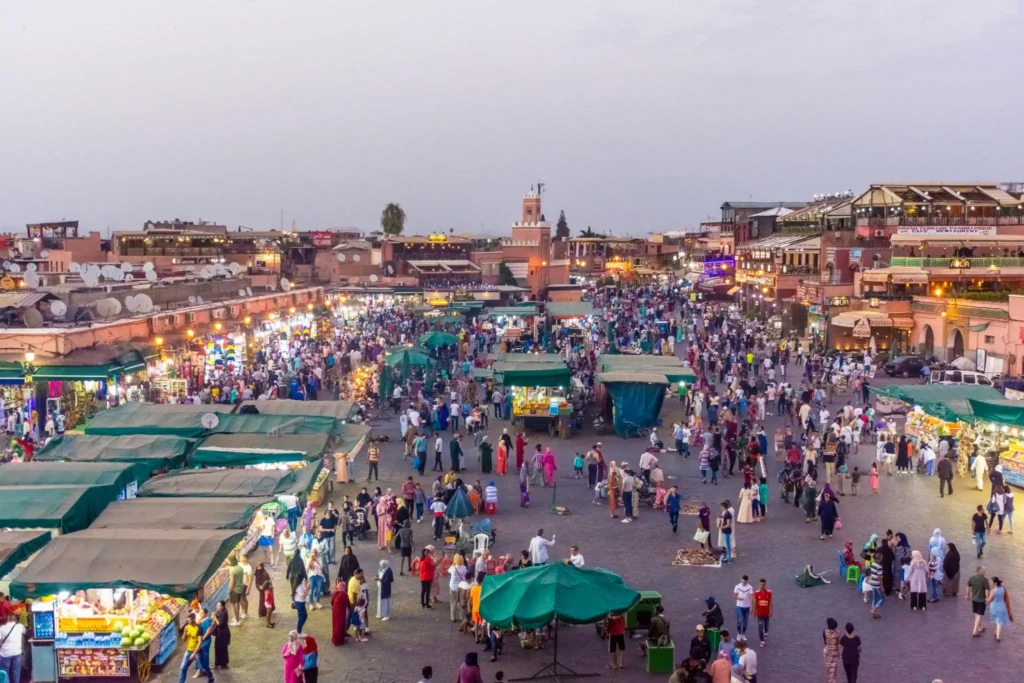
Marrakech is the one most people build a trip around: the medina, the souks, Bahia Palace, Jemaa el-Fnaa at dusk. It’s also where most of our riad stays happen.
Casablanca is Morocco’s commercial hub and most people’s arrival point rather than their destination; the Hassan II Mosque is worth the stop even on a short visit.
Rabat, the capital, offers the Kasbah of the Udayas and Hassan Tower as an easy add-on between Casablanca and Fez rather than a trip in its own right.
Fez holds one of the best-preserved medieval medinas anywhere, and rewards a guided visit far more than a wander-and-hope approach.
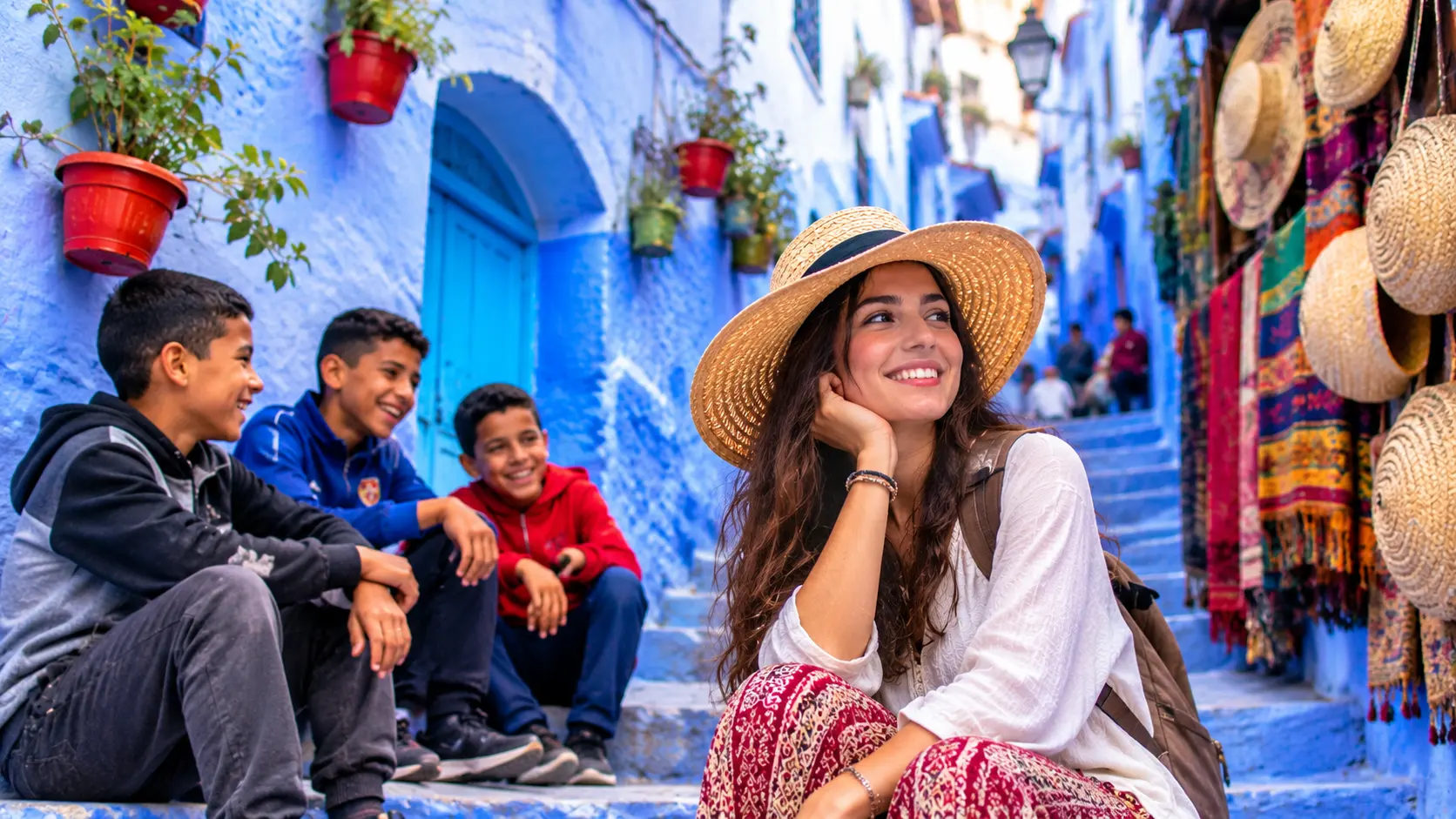
Chefchaouen, the blue city, sits a bit off the standard route, so including it usually adds a travel day, worth it for photography-focused trips, optional for everyone else.
Merzouga is your gateway to the Erg Chebbi dunes of the Sahara: desert drives, camel excursions, overnight camps.
Essaouira brings an Atlantic, windswept energy that’s a nice counterweight to Marrakech’s intensity.
The Atlas Mountains offer scenic drives and mountain villages; how much time to give them depends on season, weather, and your comfort with winding mountain roads.
What to Check Before You Book Anything
The advertised price is rarely the full story. Before you commit:
- Accommodation: get actual hotel or riad names and room categories, not just “4-star hotel.”
- Transport: confirm whether intercity travel is private or shared, and ask about realistic driving times on the longer legs.
- Guides and sightseeing: check which attractions, guides, and entrance fees are actually included.
- Desert arrangements: if Merzouga is on your route, ask about camp facilities, meals, transport and any activities charged separately.
- Cancellation terms: read the payment schedule and refund policy before you pay a deposit.
A detailed written quotation protects you from surprise costs later; if an operator won’t give you one, that’s worth noting in itself.
Practical Tips for Qatar Residents Heading to Morocco
Currency: the Moroccan dirham (MAD). Cash still matters in smaller shops and markets; cards work fine at hotels and larger businesses. Check current exchange and customs rules before you fly.
Language: Arabic and Amazigh are official; Darija (Moroccan Arabic) is what you’ll hear on the street, French is common, and English covers most tourism interactions.
Food: tagine, couscous, harira, pastilla, grilled seafood on the coast; halal options are widely available, though if you have specific dietary needs, it’s worth confirming preparation methods rather than assuming.
Clothing: solid walking shoes for the medinas, light layers for the heat, and warmer layers if mountains or desert nights are on your itinerary; desert cold at night surprises people every year.
Travel insurance: we’d call this non-negotiable, especially with desert excursions or mountain driving involved. See our notes on travel insurance for Qatar residents for what to look for in a policy.
Safety: normal precautions apply; watch your belongings, use reputable transport, and check official travel advisories such as the UK government’s Morocco travel advice before any remote mountain or desert leg of your trip.
Why Plan Through Zafir Tours
Zafir Tours is a Doha-based travel business that plans international holidays for Qatar residents, including flights, accommodation, transport, and the sightseeing arrangements that turn a list of cities into an actual trip. Whatever you’re after, cultural, family, private,or luxury, the itinerary should follow your dates, interests, and budget, not a template. We can also help with the visa and documentation side, while final entry decisions always rest with the relevant immigration authority, never with us.
How to Get a Morocco Quote from Us
Have this ready when you reach out and we can turn a quote around quickly:
- Travel dates: departure and return
- Traveller count: adults and children, with children’s ages
- Passport nationalities: so we check entry requirements correctly
- Preferred destinations: cities, mountains, desert, coast, or a mix
- Accommodation style: standard hotels, riads, or premium properties
- Travel style: private, family, or group
- Approximate budget, in QAR
- Anything else: dietary needs, mobility considerations, special occasions
Once we send a proposed itinerary, go through the flights, accommodation, transport, sightseeing, and booking terms before you commit to anything. Message us through our contact form, and we’ll start building your Morocco trip from there, or see our Europe tour packages from Qatar if you’re comparing destinations.
Frequently Asked Questions
How much does a Morocco tour package from Qatar cost?
It depends on your dates, trip length, accommodation level, and whether flights are included. Request a written quotation in QAR that spells out exactly what's covered before comparing it to anything else.
Do Qatari citizens need a visa for Morocco?
No, as of November 2026, Qatari passport holders can enter Morocco visa-free for stays of up to 90 days. Confirm current rules on the official Accès Maroc portal before booking non-refundable travel, since entry policies can change.
I'm a Qatar resident with a different passport, can I still visit Morocco?
Yes, but your requirements follow your own passport's nationality, not your Qatar residency. Some nationalities need a visa; others may qualify for Morocco's eVisa through the official Accès Maroc portal.
How many days do I actually need in Morocco?
Seven days covers a handful of cities well. Ten to twelve days lets you add the Sahara without rushing. Fourteen gives real breathing room if you want both depth and variety.
Are flights from Doha included in Morocco packages?
Sometimes, it depends on the package. Some are land-only, others bundle in the Doha–Morocco flights. Always confirm which one you're looking at before comparing prices.
Can I fly direct from Doha to Morocco?
Yes, nonstop to Casablanca with Qatar Airways and Royal Air Maroc. Qatar Airways also serves Marrakech, though check whether the current schedule is nonstop or routes via Casablanca before booking.
What's the best month to visit Morocco?
April, May, October and November generally offer the most comfortable conditions for general sightseeing, though the right month depends on which regions you're visiting.
Is Morocco good for a family holiday?
Yes, with the right pacing, cultural sites, gardens, coastal stops and shorter excursions work well. Keep daily driving times realistic and choose accommodation with families in mind.
Is Morocco a good honeymoon destination?
It genuinely is, romantic riads, premium hotels and private sightseeing around Marrakech and the surrounding mountains or coast make it a strong honeymoon option.
Is the Sahara Desert trip worth the long drive?
Most travellers say yes, a night under the stars near Merzouga tends to be the single most memorable part of a Morocco trip, but the road to get there is genuinely long.
Can I combine Morocco with Spain or Portugal?
Possibly, depending on flight connections, available time, and each country's own visa rules, including any applicable Schengen requirements. Check each country's entry requirements separately rather than assuming one visa covers both. See our Europe tour packages from Qatar for more ideas.
About the Author
Ismail Hossain Ripon is a Travel Consultant at Zafir Tours in Doha, focused on Morocco, Europe and wider international itineraries for Qatar-based travellers. His work centres on translating official entry requirements and airline schedules into itineraries that actually match a traveller’s dates, budget and pace.
Zafir Tours — Doha, Qatar — zafirtours.com — Contact